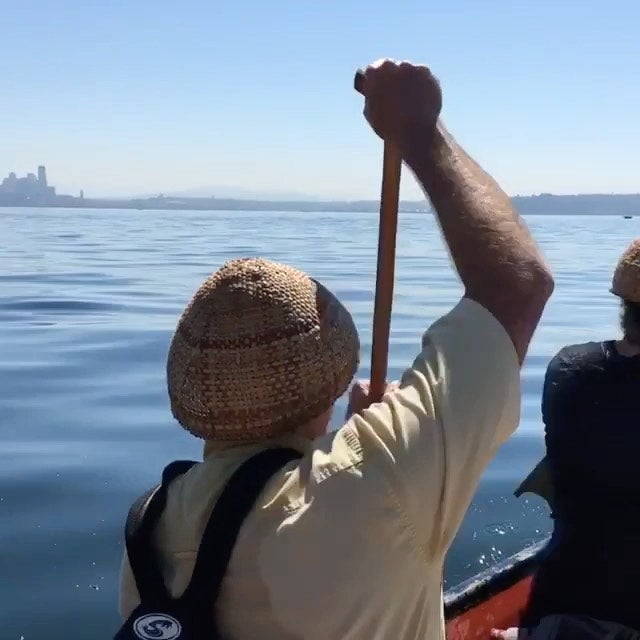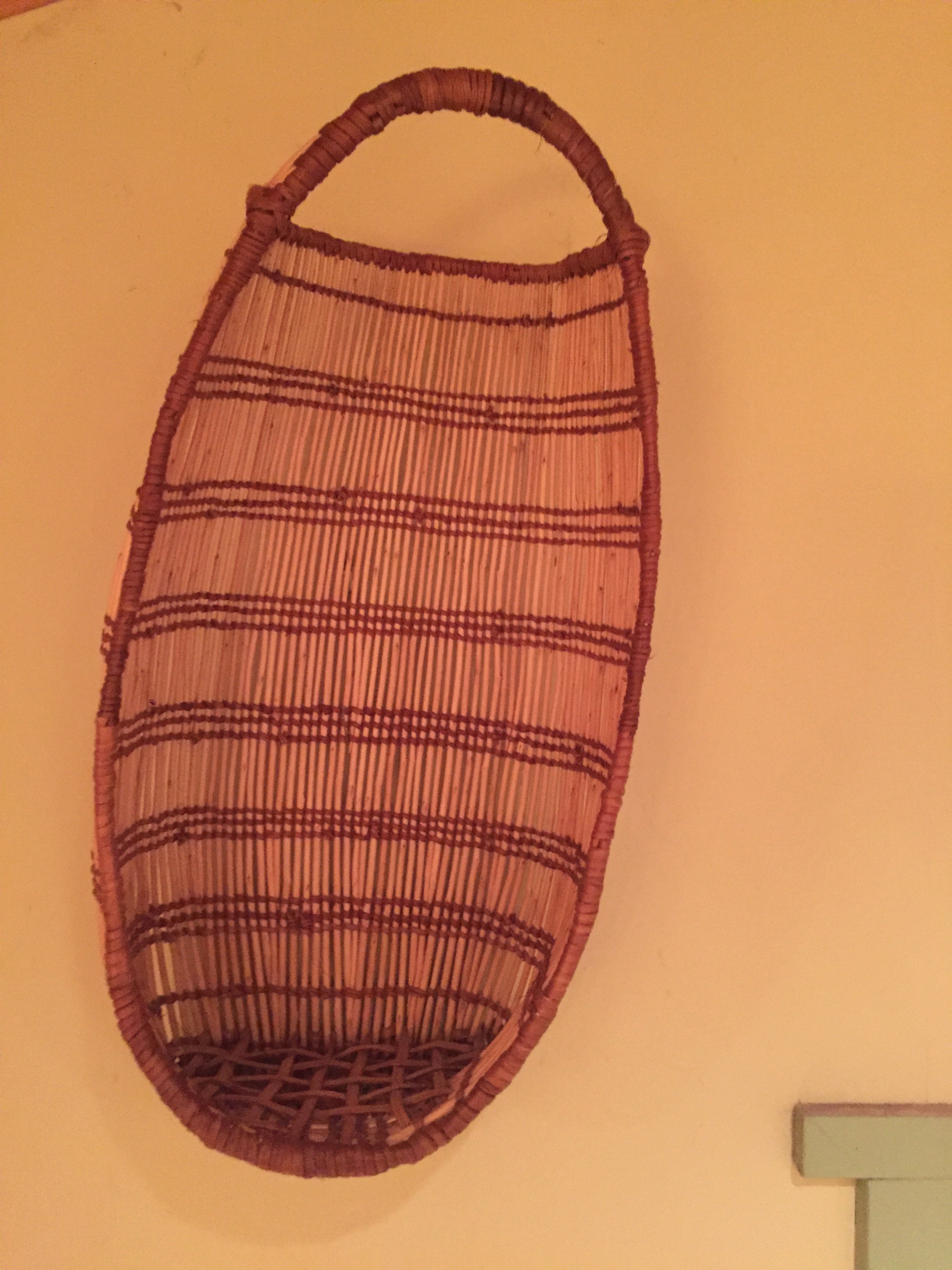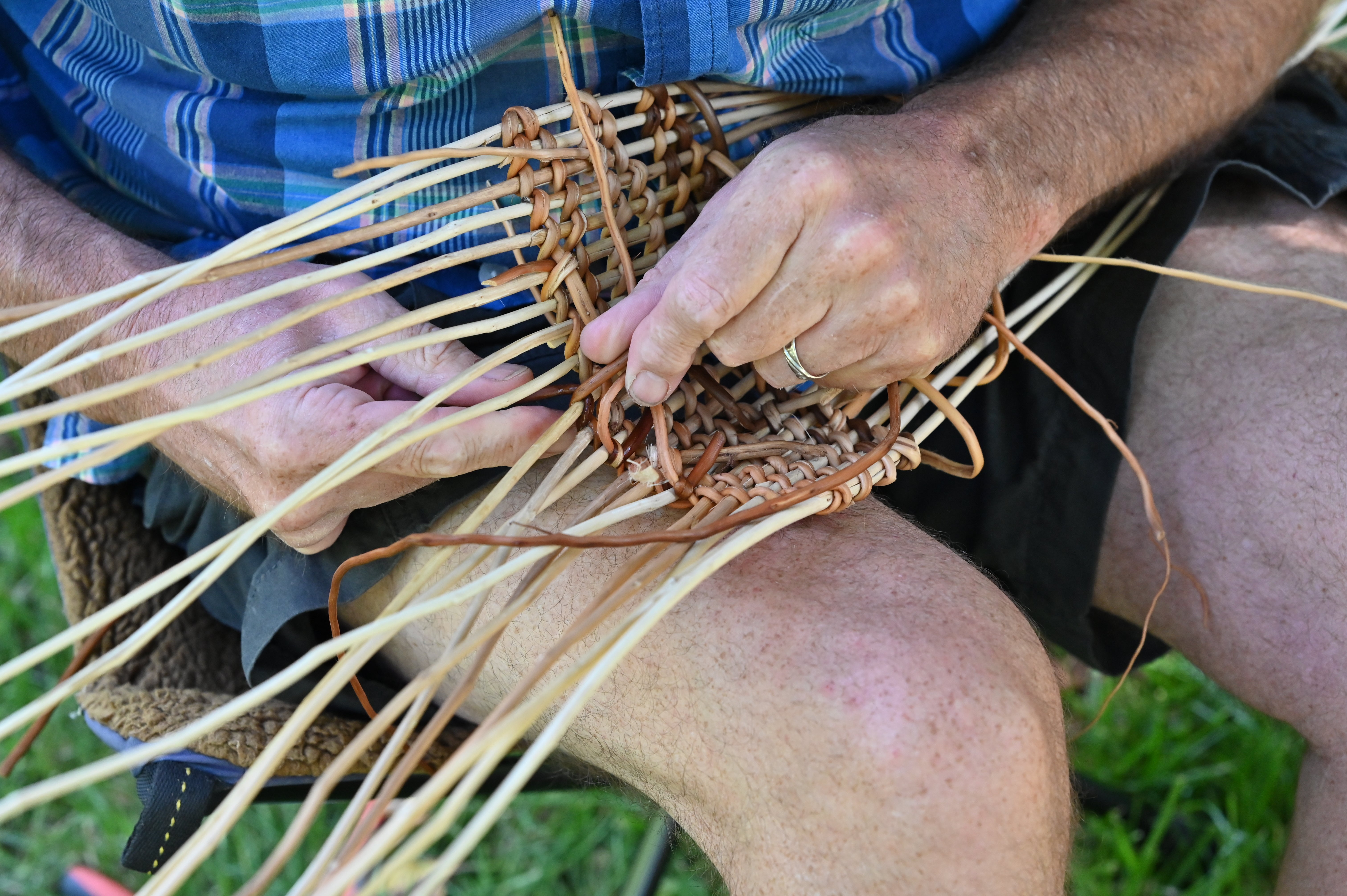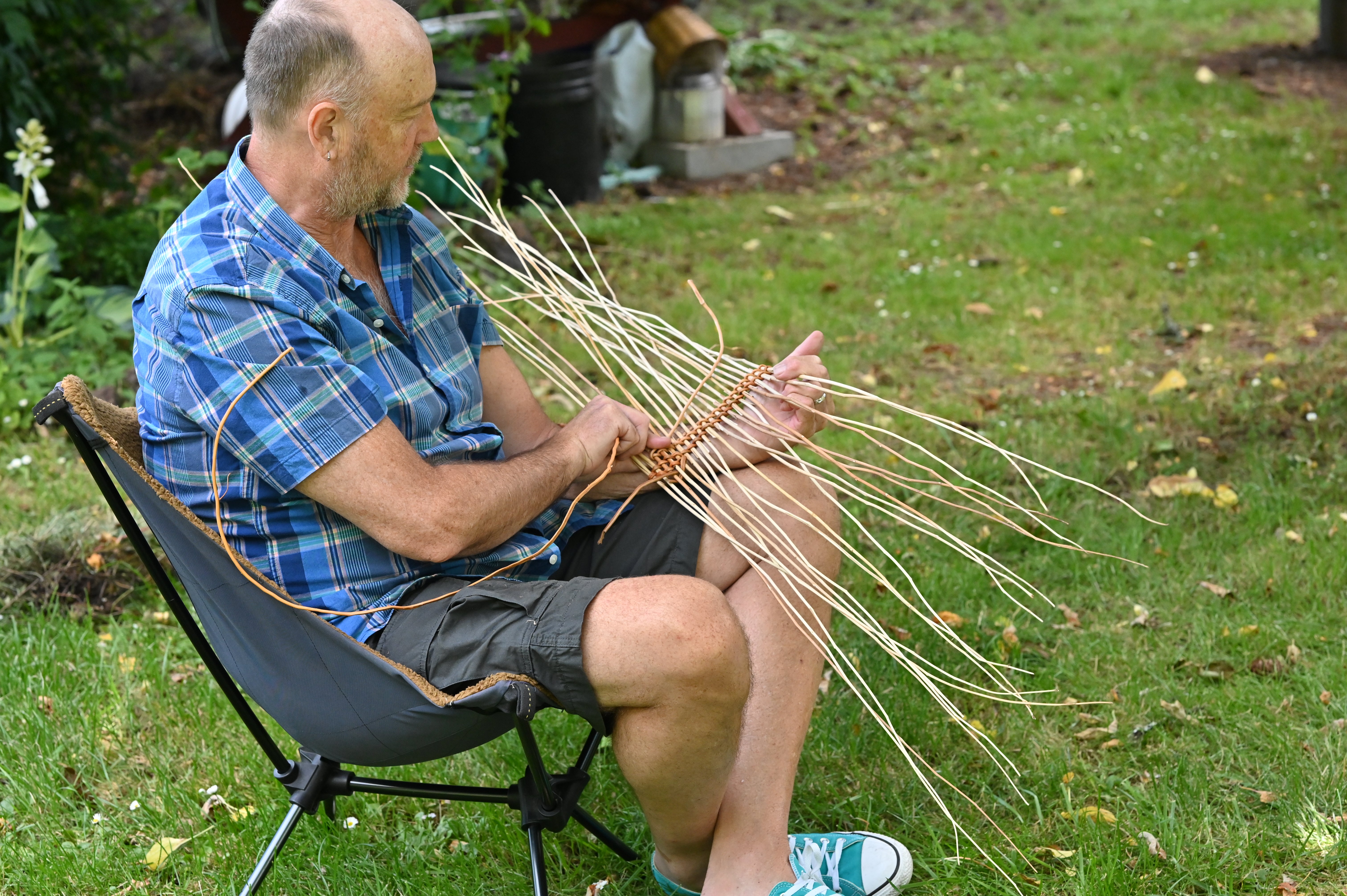
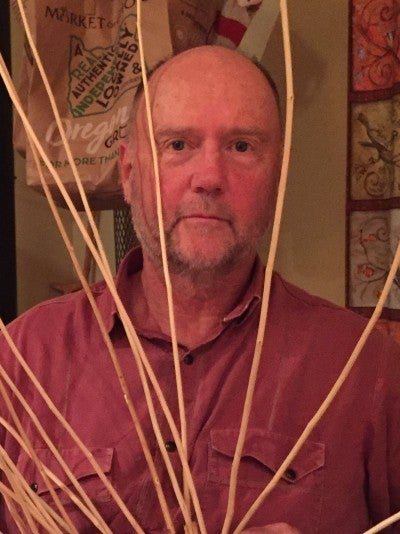
Andrew "Drew" Viles, PhD (Eugene) is a traditional basket weaver and storyteller who focuses specifically on gay-yu, Siletz cradle baskets; weaving cedar bark hats; and telling the traditional stories of the Siletz people. Viles, who is an emeritus instructor of Language, Literature, and Communication at Lane Community College, learned from elders to weave traditional baskets and carve canoe paddles as well as how to gather and process the natural materials to do so.
Bio
Andrew "Drew" Viles, PhD is a traditional basket weaver and storyteller who focuses specifically on gay-yu, Siletz cradle baskets; weaving cedar bark hats; and telling the traditional stories of the Siletz people. Viles, who is an instructor emeritus of Language, Literature, and Communication at Lane Community College, has also researched and memorized his ancestors’ traditional stories, some of which he first heard from his mother. Viles learned to weave baskets from Native elders in the area; his sisters, Melissa Viles Potter and Cynthia Viles; Confederated Tribes of Coos, Lower Umpqua, and Siuslaw tribal member Enna Helms; and his children. For Drew Viles, weaving, carving, singing, stories, language, and spiritual renewal are interwoven—he doesn't separate out the different processes. To do the work he does, he emphasizes the importance of doing it with "a good intention, coming to the work with a good heart, not bringing contention into the work." Viles started making baskets several years ago, around the same time he started to learn Chinook Wawa. He reflects, "I started basket making shortly after starting . . . studying stories, memorizing stories, encouraging myself, memorizing written-down ancestral stories, encouraging myself to do that." Viles notes, "I did some weaving early in my life, but I didn't get serious about it until I was a grandparent. And my grandson, Franklin, was about to be born, and I wanted him to have a gay-yu. A gay-yu is a traditional home for children, and it's as ancient as our creation story. . . . First woman makes everything for the first child, a cradle basket too, a gay-yu too. So this has been around as long as people have been around and babies have been put into gay-yu . . . since the beginning of time. . . . I wanted my grandson Franklin to have a place like this that he could be in." Viles asked Siletz master basket maker Bud Lane to make a gay-yu for Franklin. And Lane generously created a beautiful cradle basket. After Franklin’s gay-yu was finished, Viles decided, "if I want more grandchildren, I better learn how to do this myself. And I took lessons; Bud was willing not only to make gay-yus, but also to teach others." Weaving cradle baskets includes several techniques—open weave, twining, and wrapping. Main parts of the gay-yu are the foot, the seat, the lifeline (which you should never use to carry the basket unless short of having to save the baby floating in the water). It is traditional for Siletz men and women to weave gay-yu, though Viles noted that women usually do the close weaving and men the open weaving. The process of making a gay-yu (cradle basket) starts with collecting or harvesting spruce root and hazel. He relates that he goes out with his children and grandchildren to do this. "It's something we delight in as a family to go out and gather root and hazel shoots." Once he has the roots, next steps include stripping off the bark, and then storing the fibers for at least a year in a place open to the air (to prevent mold). To form the basket, Viles starts first with the foot, using hazel sticks for the warp (vertical or upright pieces) and spruce for the weavers. He wraps the basket edges with spruce and also does some twining. He notes that since spruce darkens with age, it gives the baskets a nice two-tone look. What distinguishes baby baskets from others is the open work weaving versus the tight weaving necessary for cedar bark hats. As part of his process to weave a basket for his new grandchild, born in December of 2020, he's been teaching his son Nicholas, already a proficient basket maker who has a full-time job with the Confederated Tribes of Siletz Indians, to weave cradle baskets. Drew Viles, who has also served on and off since the early 1980s as a Tribal Court Associate Judge for the Confederated Tribes of Siletz Indians, has long been involved with Canoe Journey, thanks to his son Jerome. Viles is a firm believer in the healing power of the traditional ways he follows. He was a featured participant in the 2013 Smithsonian Folklife Festival's "One World, Many Voices: Endangered Languages and Cultural Heritage" program as was his son, dancer and ancestral language revitalization activist Carson Viles.